
November is the short-rains season in Kenya, and frequent showers can make laundry a challenge. You wash your clothes, hang them outside, and just when they should be drying, another shower arrives. With cloudy skies and damp conditions, clothes can take longer to dry, leaving school uniforms, office outfits and everyday essentials damp when you need them.
For Kenyan households, this is the time to rethink the laundry routine. Knowing how to wash and dry clothes fast during the rainy season can help you manage everyday laundry, prevent musty smells and keep your family’s clothes ready to wear even when outdoor drying becomes difficult.
Whether you’re washing school uniforms before Monday morning or trying to get everyday clothes ready between showers, these practical tips will help you manage laundry during Kenya’s November short-rains season.
A good laundry routine starts with choosing a detergent suited to your household’s washing needs. During the short-rains season, proper washing and thorough rinsing are important because clothes may take longer to dry.
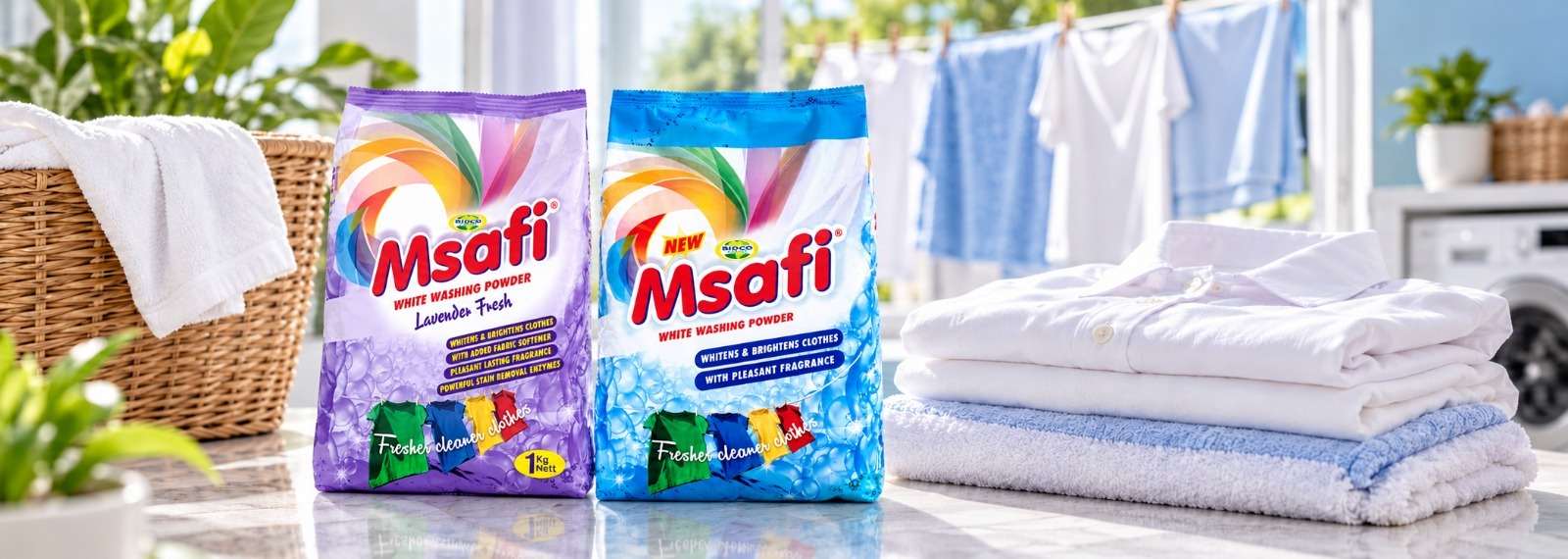
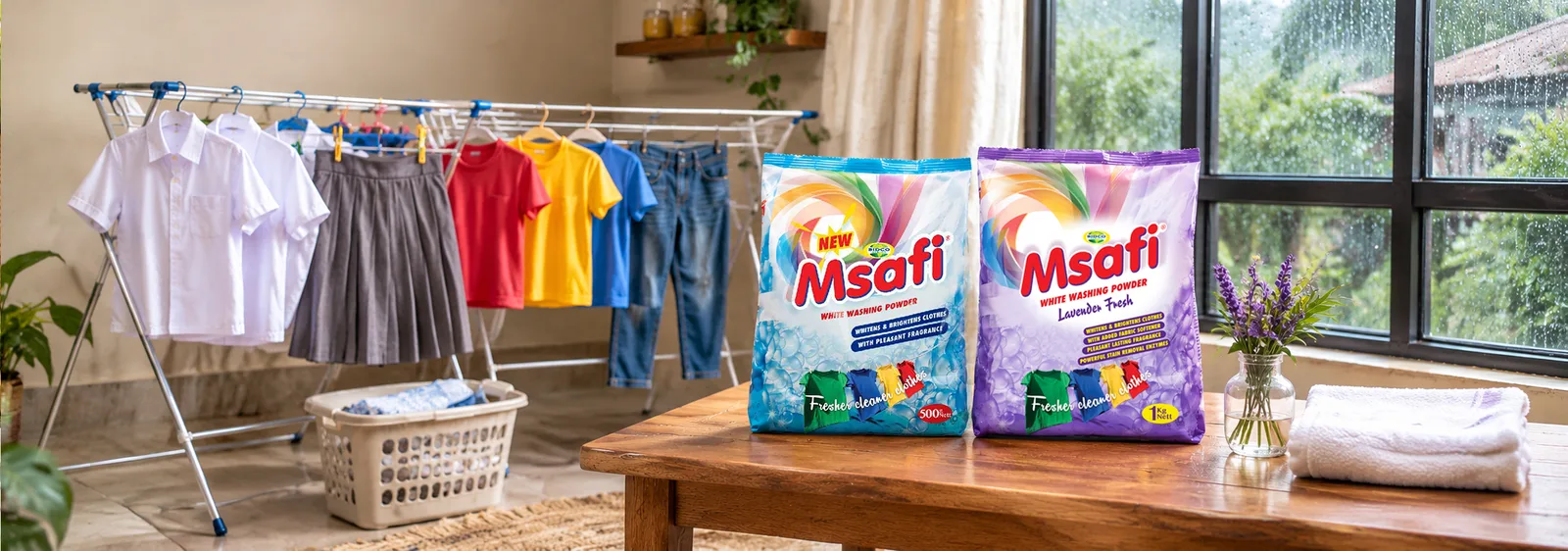
Msafi Washing Powder is available in two variants: Msafi White Washing Powder and Msafi Lavender Washing Powder.
Msafi White Washing Powder features optical brighteners to help keep clothes looking bright, along with enzymes designed to help remove tough stains.
Msafi Lavender Washing Powder offers these features too, with added fabric softener and a pleasant lavender fragrance.
Both variants are designed to lather in different types of water and leave clothes with a pleasant fragrance. Choose the variant that suits your household’s preferences and follow the instructions on the packaging.
Remember that detergent alone cannot prevent damp smells if clothes remain wet for too long. Proper drying, good ventilation and dry storage are equally important.
Knowing how to wash clothes during the rainy season starts with planning your laundry around the space and time you have available. When showers are frequent, washing manageable loads and prioritising essential garments can make drying easier.
Avoid washing more clothes than you can comfortably hang to dry. Smaller loads are easier to spread across a drying rack, giving each garment enough room for air to circulate.
Follow the dosage instructions on your Msafi Washing Powder packaging and adjust for the load as directed. Using more detergent than recommended does not automatically make clothes cleaner and may leave residue behind.
Take clothes out of the washing machine as soon as the cycle ends. Leaving wet laundry sitting in a closed machine or washing basin for an extended period can contribute to unpleasant odours.
During November’s short rains, wash school uniforms, work clothes and other essentials early enough to give them sufficient drying time. Leave bulky items such as bedsheets and thick towels for when you have enough drying space.
If you’re wondering how to dry clothes quickly when it’s raining, focus on removing excess water and allowing air to circulate around your clothes. These practical steps can help reduce drying time, even when sunshine is limited.
If you’re using a washing machine, select an appropriate spin cycle for the fabric. If you’re handwashing, gently squeeze out excess water without twisting delicate materials too aggressively.
Removing excess water means less moisture needs to evaporate during drying, which can make a difference when the weather is humid or overcast.
Give each item a good shake before hanging it. Straighten sleeves, trouser legs and other folded sections so air can reach more of the fabric.
Avoid leaving clothes bunched together on the rack, as overlapping material can trap moisture and slow down drying.
Avoid overcrowding your drying rack. Leave gaps between garments so air can move around them.
If you have a large load, use a second rack or dry the laundry in smaller batches rather than squeezing everything into one space.
A fan can help circulate air around your clothes and carry moisture away from the fabric. Place your drying rack in a well-ventilated room and position the fan so air moves around the garments.
Open windows when outdoor conditions allow, while avoiding rain entering the room. If your home has persistently high humidity, a dehumidifier may also help.
Jeans, hoodies, towels and other thick garments usually take longer to dry than lightweight clothing. Hang them with enough space around them and turn them periodically so different sections receive airflow.
Learning how to dry clothes indoors fast can be particularly useful during Kenya’s November short rains. You don’t need direct sunshine to dry your laundry. The key is to create conditions that help moisture evaporate instead of allowing it to remain trapped in the fabric.
Choose a well-ventilated room. Avoid small, closed spaces where moisture can build up. Good airflow helps clothes dry more effectively.
Use a drying rack. Spread garments across the rack instead of folding them over one another. Ensure longer items have enough room to hang freely.
Prioritise lightweight clothes. If you need an outfit for the next morning, wash lightweight garments first. They may dry sooner than thick towels, jeans or heavy sweatshirts.
Turn garments periodically. Check the parts that remain folded or overlap, including waistbands, pockets and sleeves.
Keep clothes away from direct heat. Avoid placing wet garments near open flames or hot appliances. If you use a heated drying appliance, follow its safety and garment-care instructions.
Manage indoor moisture. Drying large amounts of laundry indoors adds moisture to your home. Ventilate the room where possible to help prevent condensation and dampness.
These simple methods can help you dry clothes indoors fast when November showers make outdoor drying unreliable.
One of the biggest frustrations of rainy-season laundry is taking clothes off the drying rack only to notice a musty smell. This can happen when garments remain damp for too long, are left sitting in a washing machine or are stored before they have dried completely.
Knowing how to stop clothes smelling damp starts with good washing, proper drying and careful storage.
Follow the dosage instructions on the detergent packaging. Excess detergent can leave residue behind, while correct usage helps you wash clothes according to the product’s directions.
Msafi White Washing Powder offers optical brighteners and stain-removal enzymes, while Msafi Lavender Washing Powder combines these features with added fabric softener and a lavender fragrance. Both variants are options for everyday household laundry.
However, fragrance cannot replace proper drying. Clothes still need sufficient airflow and time to dry completely.
A garment may feel dry on the outside while thicker sections still hold moisture. Check collars, cuffs, seams, pockets and waistbands before folding clothes.
If any part feels damp, leave the garment on the rack for longer.
Do not put damp clothes away just because you need to clear the drying rack. Make sure garments are completely dry before folding and storing them.
Keep wardrobes clean, avoid overcrowding shelves and drawers, and improve ventilation where possible.
If clothes have developed a persistent musty smell, wash them again according to their care labels and dry them thoroughly. Check that your washing machine, laundry basket and drying area are clean too.
Even with the right washing powder, certain habits can make drying more difficult during Kenya’s short-rains season. Avoid these common mistakes to make your laundry routine more manageable.
Avoiding these mistakes, together with good washing and drying practices, can help you keep laundry under control throughout November’s short rains.
Kenya’s November short rains don’t have to disrupt your entire laundry routine. Removing excess water, spacing clothes properly, improving airflow and making sure garments dry completely can help you manage laundry more effectively, even when sunshine is limited.
For everyday household washing, choose between Msafi White Washing Powder, with optical brighteners and stain-removal enzymes, and Msafi Lavender Washing Powder, which offers those features alongside added fabric softener and a lavender fragrance.
Explore Msafi White Washing Powder and Msafi Lavender Washing Powder on Bidco Shop to find the variant that suits your household’s laundry preferences.
With a little planning, the right washing routine and proper drying habits, you can spend less time worrying about damp clothes and feel more prepared for the next rainy day.